
What Low Water Levels Reveal: A Lake Norman Waterfront Buyer's Guide
By Vic and Amy Petrenko, The Petrenko Group
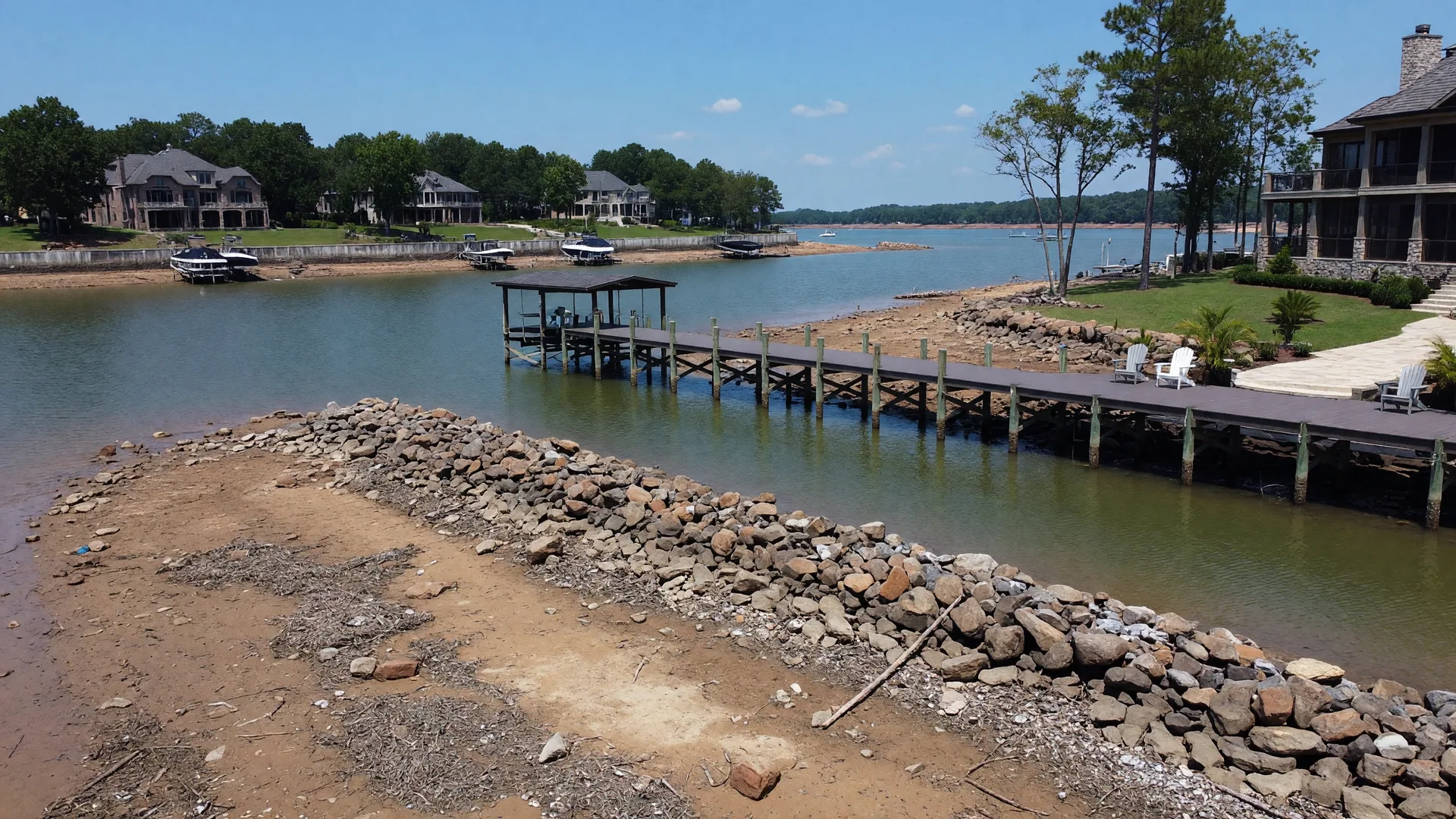
As of early July 2026, Lake Norman is approximately three to four feet below its full-pool target of 98 feet, with Duke Energy reporting water levels near 94 feet. The drought conditions driving these levels have been classified as "exceptional" (D4) by the National Drought Mitigation Center, and they are not expected to improve significantly before late summer or fall.
For current waterfront homeowners, low water levels create real inconveniences, shallower dock access, exposed hazards, and restrictions on boat ramps across the region. But for buyers who are actively evaluating waterfront properties, this moment presents a rare and valuable opportunity.
Here is what we mean: when the water is at full pool, almost every waterfront property looks good. The dock sits in deep water, the shoreline is hidden beneath the surface, and the view from the patio is wide and inviting. When the water drops, the truth comes out, and what it reveals can save you tens of thousands of dollars or confirm that a property is as solid as it appears.
What Low Water Lets You See
We have been advising our buyers to view waterfront properties during low water conditions for years. Here is what you can learn when the lake level drops:
1. Actual Water Depth at the Dock
At full pool, most docks on Lake Norman sit in six to twelve feet of water. When the lake drops three to four feet, you can see exactly how much water depth you are working with, and whether that depth is sufficient for your boat. If you draw a larger vessel or you plan to dock a sailboat with a deeper keel, this information is critical. A dock that looks perfectly fine in June might sit over three feet of water and exposed bottom by October.
Ask the seller or their agent for Duke Energy's historical low-water data for the lot. Cross-reference that with what you observe during your visit. If the dock barely floats during current conditions, that is a red flag, or at minimum, a negotiating point.
2. Shoreline Condition and Erosion
When the water recedes, you can see the shoreline that is normally underwater. Look for signs of erosion, exposed root systems, undercut banks, missing riprap or shoreline stabilization. Some erosion is normal and manageable. Severe erosion, particularly on a steep bank or near a seawall, can be expensive to remediate and may affect the structural integrity of landscaping, walkways, or even the foundation of accessory structures near the waterline.
We also recommend paying attention to how the shoreline looks on the neighboring properties. Waterfront erosion is not always contained to a single lot, and upstream or adjacent erosion patterns can affect your property over time.
3. Submerged Hazards
Lake Norman's lower levels in 2026 have exposed shoals, stumps, and rock formations that are normally hidden. While some of these hazards are in the navigational channel and marked by buoys, others are closer to shore and can affect your boat's approach to the dock. If a property's approach channel has significant underwater hazards during low water, that is something you want to understand before purchasing, because those hazards do not disappear when the lake refills; they are simply invisible again.
4. Septic System Location and Drain Field
Many waterfront properties on Lake Norman use septic systems rather than public sewer. During low water, you can sometimes identify the approximate location of drain fields, particularly in areas where the ground slopes toward the lake. If a septic drain field appears to be very close to the waterline, or if you notice soft, saturated ground near the septic tank, that warrants further investigation. A qualified septic inspection is always recommended, but a visual assessment during low water can help you ask better questions before you commit.
5. Dock Construction and Maintenance
With the dock piling and understructure exposed, you can get a clear look at the condition of the wood, metal fasteners, and electrical systems. Check for rotting pilings, corroded hardware, and any visible damage from previous high-water events or debris. Dock repairs and replacements are among the most significant expenses a waterfront homeowner can face, a new private dock with a boat lift can cost $150,000 to $300,000 or more, depending on scope and permits. Knowing the condition before you buy gives you leverage in negotiations and clarity about upcoming expenses.
A Practical Viewing Checklist
If you are shopping for waterfront property on Lake Norman right now, here is how we recommend approaching your viewings:
- Visit during low water. Do not wait for conditions to "normalize." Current conditions are the most honest version of the property you will see.
- Walk the shoreline. Get out of the car and walk the waterline. Look at the soil, the erosion patterns, the rock formations, and the neighbor's shoreline on both sides.
- Measure dock depth. Bring a weighted tape measure or ask for documentation. Know exactly what you are working with at current and historical low-water levels.
- Inspect dock infrastructure. Look at the pilings, the decking, the electrical connections, and the boat lift. Note any signs of deferred maintenance.
- Check the approach. If you have a boat, plan to drive in from the main channel during your visit. Pay attention to water depth markers and your depth finder readings along the way.
- Request septic records. Ask for the last inspection report and the original permit. Confirm the drain field location relative to the current waterline.
- Document everything. Take photos and video during your visit. Low-water conditions are temporary, you want a record of what you saw when the truth was visible.
For Sellers: What Buyers Will Be Looking At
If you are a waterfront homeowner considering a sale in the current market, we want you to understand something: sophisticated buyers and their agents are paying close attention to the details that low water exposes. This is not a time for assumptions or wishful thinking.
Before listing, we recommend having your dock professionally inspected, your septic system evaluated, and your shoreline assessed for erosion concerns. Proactive preparation, disclosing what you know and addressing what you can, builds buyer confidence and supports stronger offers. The properties that perform best in a market where buyers can see everything are the ones that have nothing to hide.
Why This Matters for Every Transaction
Lake Norman will refill. Drought conditions are cyclical, and the lake has recovered from similar drawdowns before. But the information that low water reveals about a property's true condition, the water depth, the shoreline stability, the dock integrity, the hazard profile, those facts do not change when the water rises. They are simply hidden again.
This is one of the reasons we attend every inspection and every waterfront showing with our buyers. The details matter. The timing of your visit matters. And having an advisor who understands what to look for, and when to look for it, is one of the most valuable things a buyer can have in a waterfront transaction.
If you are buying waterfront on Lake Norman this summer, we would welcome the opportunity to walk the shoreline with you. These conditions will not last forever. But the decisions you make during them will.
Committed to Your Success. Contact Vic and Amy Petrenko at The Petrenko Group.